
Looking for a solid way to get real espresso when you’re off the grid? We spent some time with the Nanopresso and, honestly, it surprised us. This little manual gadget cranks out actual espresso—no plug, no batteries, just you and some elbow grease. It claims up to 18 bars of pressure using a clever hand-pump, and it’s not just marketing fluff.

- No battery/electricity need/Manual operation only! Nanopresso is one of the best and most versatile espresso machines. Built around a newly patented pumping system, the Nanopresso is capable of reaching, with the help of your hands, a maximum of 18 bars (261 PSI) of pressure for unparalleled coffee extractions qualities.
- Achieving the perfect espresso shot is far from easy. The Nanopresso works best with finely ground coffee that is tamped hard. Thanks to its innovative construction and easy operation, Nanopresso will help you brew perfect cups with a nice and dense crema layer every time.
- It is delightfully easy to operate and simple to use. The Nanopresso requires 15% less force to pump compared to previous models (1st generation Minipresso). When necessary, every components of the portafilter are easily separated for deep cleaning.

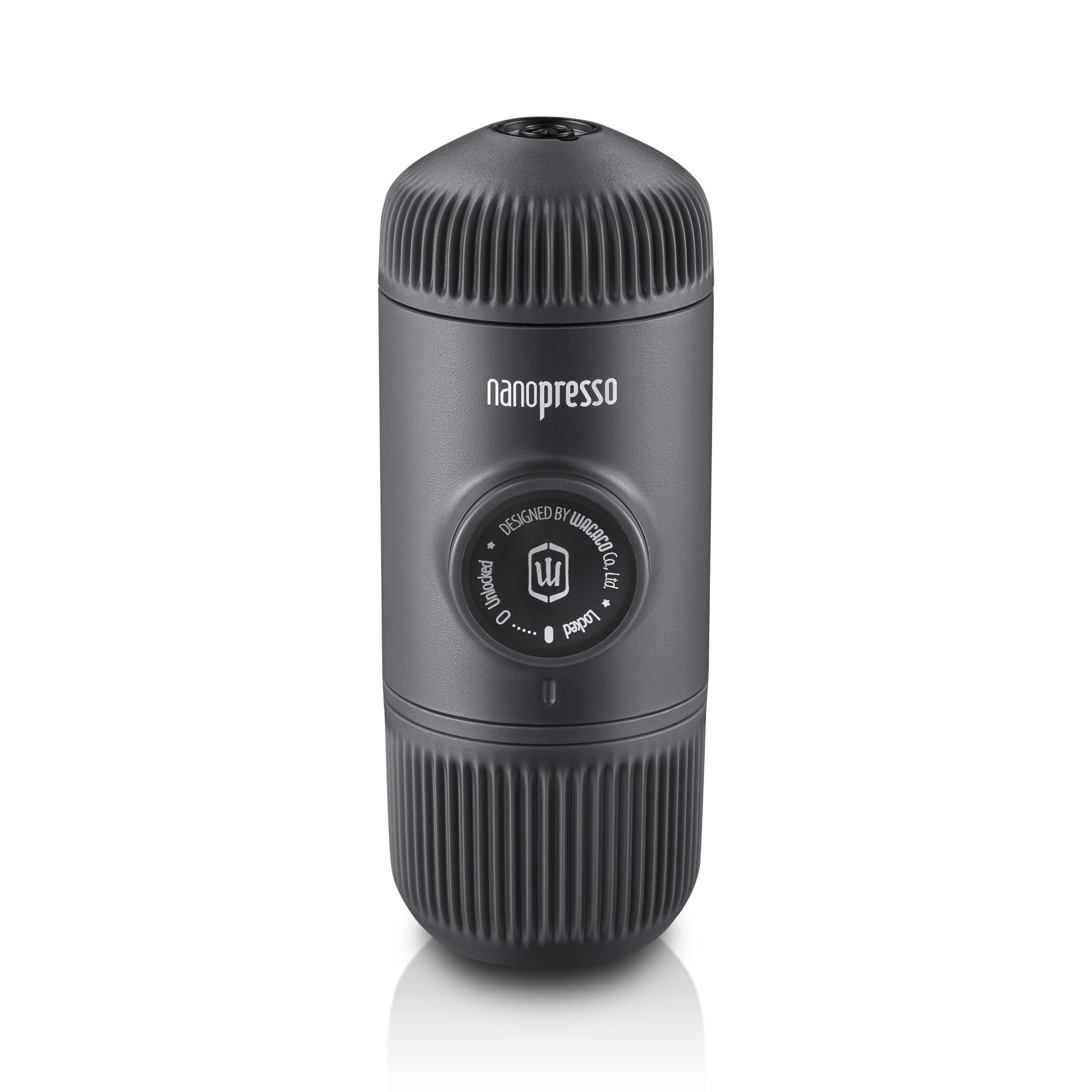
There’s a bit of a knack to brewing with it. You’ll want your coffee ground fine and tamped down firmly—otherwise, forget about that signature crema. Expect about 10-15 pumps per shot, and it definitely helps to preheat the whole thing with hot water first.
Build quality? Genuinely impressive. Everything comes apart for cleaning, and the new pump design is noticeably easier to use than older models. At 12 ounces, it’s not adding much weight to your bag.
There are some quirks. The water tank is tiny, so you’re refilling often if you want more than one shot. And compared to electric machines, the whole process is slower—you’ve got to warm it up and then pump each shot by hand.
Overview: WACACO Nanopresso Portable Espresso Maker
This manual espresso maker manages to pull off real espresso without any power. That hand-pumping system? It really does hit 18 bars, so you get crema that’s actually comparable to a countertop machine.
The pump is easier on your hands than the older Minipresso—about 15% less effort, which is noticeable if you’re making a few shots. Just make sure your grind is fine and tamped in tight.
People seem to love the compact size and how it holds up on the road. Everything comes apart for cleaning, which is a must if you want your coffee tasting right after a few uses.
But yeah, the water reservoir is small, so you’re refilling a lot if you want to make coffee for more than one. And there are no extras in the box—if you want to use capsules or brew double shots, you’ll have to grab those accessories separately.
The matte finish feels sturdy, and the included bag is handy for travel, though nothing fancy.
Manual Operation and High Pressure Extraction
You have to put in the work, but when you get the hang of it, the pay-off is worth it. The Nanopresso’s pump system hits up to 18 bars (that’s 261 PSI for the nerds out there).
Pressure Performance:
- Max pressure: 18 bars
- Pump effort: 15% less than previous models
- Crema: Genuinely dense, not just a thin layer
The pumping rhythm takes a few tries to get right, but it becomes second nature. Compared to the original Minipresso, you don’t need as much hand strength, which is a relief if you’re making more than one cup.
You’ll notice the difference in crema if you use the right grind and tamp. It’s all manual, so you control the timing, but it does mean you need to keep the pressure steady for the best results.
Brewing Quality and Crema Performance
That 18-bar system isn’t just for show. The Nanopresso pulls shots that honestly rival some home machines, provided you’re using good beans and the right technique.
Crema is a highlight:
- Thick, golden foam every time
- Sticks around for a few minutes
- Texture is close to what you’d get at a real café
You do need to warm up the brewer with hot water first and keep a steady hand while pumping. There’s a bit of a learning curve, but it’s not intimidating—most people get the hang of it quickly.
Once you’ve got your grind and tamp dialed in, the shots are consistent: about 80ml per pull, with a nice body and very little bitterness if you do it right.
User Convenience and Cleaning
The Nanopresso is pretty straightforward. That reduced pumping force really helps, especially if you’re making a few shots in a row. Just add your coffee, tamp, and start pumping.
Operation Benefits:
- Doesn’t need batteries or power
- Pumping is easier than before
- Small enough to toss in any bag
Cleaning is refreshingly easy. Every part comes apart, so you can actually get everything clean—no weird corners where coffee oils hide.
Downsides? The water tank is small, so you’re refilling if you want more than one cup. You also need to run hot water through it to preheat, which adds a couple of minutes. And yeah, the pumping can feel repetitive if you’re making coffee for a group.
Portability for Travel and Outdoor Use
If you’re the type who needs good coffee on the go, this thing is a game-changer. It weighs about 12 ounces and stands just over six inches tall, so it disappears in your pack.
Key Travel Features:
- Weight: 12 oz
- Size: 2.44″ x 2.8″ x 6.14″
- No power needed
- Carrying bag included
Campers seem to love it, and it’s popular with folks on motorcycles or long trips where space and power are at a premium. No hunting for outlets, no worrying about charging.
The bag keeps everything together, but the small water tank can be annoying if water is scarce. On the plus side, it doesn’t rattle around on bumpy rides—everything fits snugly.
Accessory Compatibility
WACACO has built a little ecosystem around the Nanopresso, but options are still somewhat limited. The included bag is fine for travel, but if you want real protection, you’ll want to look elsewhere.
There’s an NS Adapter for Nespresso capsules and a Barista Kit for more control over your shots. These fit on securely—nothing feels loose.
Accessories:
- NS Adapter (for Nespresso capsules)
- Barista Kit (for double shots, etc.)
- Hard case (sold separately)
- Water tank extensions
Everything screws on solidly, but don’t expect a lot of third-party options. If you want to upgrade or replace something, you’re basically stuck with WACACO’s own stuff.
Most of the accessories cost extra, so the price can creep up if you want the full setup.
Pros and Cons
After dragging this thing along on a few trips, here’s where it shines and where it stumbles.
Pros
You get real espresso—crema and all—from a device that fits in your hand. That 18-bar pressure isn’t just marketing, and with the right coffee, shots are genuinely good.
Ease of use is a real plus. The new pump design makes it less tiring, and once you’ve got your routine down, setup is quick.
| Travel Benefits | Performance |
|---|---|
| Small and easy to pack | Shots taste great, real crema |
| No power needed | Works with any fine-ground coffee |
| Feels sturdy, holds up to travel | Everything comes apart for cleaning |
It’s tough, too. We didn’t baby it, and it still looks new. Cleaning is easy, even in the woods.
Cons
Time investment is real. You’ve got to preheat, grind, tamp, and pump—plan for 5-7 minutes per cup.
The water tank is tiny. One shot almost empties it, so making coffee for two means stopping to refill.
Learning curve isn’t huge, but you’ll probably mess up a few shots before you nail your technique. Grind, tamp, and pump rhythm all matter.
The base kit is pretty bare-bones. If you want to use pods or make bigger shots, you’ll need to shell out for extras, which adds up.
Customer Reviews
Most folks seem genuinely happy with the Nanopresso. People mention the sturdy build, smart design, and the fact that it really does make espresso with crema—not just strong coffee.
What people like:
- Build: Feels solid, not flimsy
- Coffee: Real espresso flavor and crema
- Travel: Packs up small, everything fits together
What people complain about:
- Setup time: Preheating takes a bit
- Pumping: Takes some effort to get pressure up
- Water tank: Too small for making coffee for a group
Reviews come in from all over the world, with some Italians (who should know!) saying it’s the real deal. Motorcycle travelers and campers seem especially loyal. The instruction manual gets mixed reviews—lots of languages, kind of bulky.
If you’re up for the manual effort, most people walk away satisfied.
Conclusion
After plenty of use, the Nanopresso is the real deal for espresso on the go. That 18-bar pressure system actually delivers, and the crema is legit—way better than we expected from something this portable.
It’s tiny, tough, and designed for travel. Everything packs up neatly, and it feels like it’ll survive some rough handling.
What stands out:
- Excellent espresso for a manual gadget
- Super portable and thoughtfully designed
- Cleaning is a breeze
The downsides:
- Water tank is small
- Needs preheating for best results
- Takes some practice and patience
It’s really for coffee lovers who don’t mind putting in a little work. If you’re the kind who won’t settle for instant, this thing is absolutely worth a look.
Frequently Asked Questions
Here are some of the questions people keep asking about the Nanopresso—maybe you’re wondering the same.
What improvements have been made in the Wacaco Nanopresso compared to the previous models?
The pump is way easier—about 15% less effort than the Minipresso. That adds up if you’re making a few shots. They totally reworked the pump, so hitting 18 bars is more consistent now.
Cleaning is way less of a hassle. Everything comes apart without tools, so you can keep it fresh with minimal fuss.
How does the Nanopresso performance compare to traditional home espresso machines?
If you use good coffee and tamp it right, the Nanopresso can hold its own with a decent home machine—dense crema and all, just in a smaller shot.
But you do all the work: preheating, pumping, cleaning. Home machines are faster and can churn out shots back-to-back, while this is more of a one-at-a-time deal.
Main differences:
- Manual pump vs. automatic pressure
- One shot at a time
- Portable and power-free vs. countertop and plug-in
Are there any notable differences between the Nanopresso and Wacaco’s Picopresso in terms of espresso quality?
Both make legit espresso with crema. The Nanopresso uses pre-ground coffee; the Picopresso has a different basket setup.
Nanopresso has a slightly bigger water tank, so you can get a bit more out of each brew. The pump is also easier—again, that 15% less effort makes a difference.
They’re both portable, but size and weight differ a bit, so pick what fits your travel style.
Can the Nanopresso Barista Kit significantly enhance the espresso-making experience?
The Barista Kit lets you pull double espresso shots, something the standard Nanopresso just can’t do. For anyone who likes a bigger cup or craves a stronger jolt, this is a pretty tempting upgrade.
You get extra parts that expand the brewing chamber capacity. Swapping them in is a breeze—it doesn’t really complicate the process, which is a relief.
People say the double shots still have that classic crema, even with the larger volume. Sure, you’ll need to pump a bit more, but you end up with more espresso, so it feels worth it.
What are the maintenance and cleaning requirements for the Wacaco Nanopresso?
Daily cleaning looks like:
- Taking apart the portafilter bits
- Giving everything a rinse with warm water
- Making sure it’s all dry before you stash it away
No tools needed—the portafilter just comes apart by hand. Most of the time, coffee residue doesn’t really cling, so cleanup is quick.
If you’re using it a lot, a deeper clean once a week is smart. All the pieces except the main body can soak in some warm, soapy water. The matte finish? It shrugs off fingerprints and wipes down without hassle.
How portable is the Wacaco Nanopresso for frequent travelers?
The device measures 2.44″ x 2.8″ x 6.14″ and weighs just 12 ounces. It slides into most travel bags pretty easily—doesn’t hog precious space.
The carrying bag’s a nice touch, too. It keeps the Nanopresso safe from bumps while you’re on the move, and honestly, it’s small enough that you can cram it in with the rest of your gear without much fuss.
Travel considerations:
| Aspect | Details |
|---|---|
| Weight | 12 ounces total |
| Durability | Solid construction handles regular transport |
| Setup time | 2-3 minutes including warming |
| Cleanup | Quick rinse sufficient between uses |
For folks on the go, the manual pump is a real perk—no need to stress about finding the right plug or charging up. Whether you’re brewing at a campsite, in a random hotel room, or even sneaking a shot at the office, it manages to deliver a solid espresso where options are usually pretty bleak.


