
Not every home makes running Ethernet cables convenient. If you’re stuck with Wi-Fi dead zones or spotty wireless, the TP-Link AV2000 Powerline Kit is one of those gadgets that promises a wired connection using your existing electrical wiring.
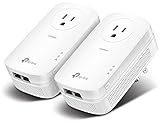
- 𝐄𝐱𝐭𝐞𝐧𝐝 𝐘𝐨𝐮𝐫 𝐄𝐭𝐡𝐞𝐫𝐧𝐞𝐭 𝐂𝐨𝐧𝐧𝐞𝐜𝐭𝐢𝐨𝐧 𝐓𝐡𝐫𝐨𝐮𝐠𝐡 𝐘𝐨𝐮𝐫 𝐄𝐥𝐞𝐜𝐭𝐫𝐢𝐜𝐚𝐥 𝐒𝐲𝐬𝐭𝐞𝐦 - This device is meant for individuals that are not able to extend their Ethernet connections where routers or range extenders do not work. Speed cannot exceed your internet plan’s limit.
- 𝐇𝐨𝐦𝐞𝐏𝐥𝐮𝐠 𝐀𝐕𝟐 - Delivers AV2000 powerline speeds over existing electrical wiring, extending home network wired connectivity by up to 750ft through thick walls and other barriers. Ideal for multi-story homes, basements, attics, and garages.
- 𝐀𝐝𝐯𝐢𝐬𝐨𝐫𝐲 - Adapters must be on the same electrical circuit for connectivity. Requires direct outlet plug in. Does not work with surge protectors. 𝐒𝐩𝐞𝐞𝐝𝐬 𝐦𝐚𝐲 𝐛𝐞 𝐥𝐨𝐰𝐞𝐫 𝐝𝐮𝐞 𝐭𝐨 𝐰𝐢𝐫𝐢𝐧𝐠 𝐪𝐮𝐚𝐥𝐢𝐭𝐲, 𝐚𝐝𝐚𝐩𝐭𝐞𝐫 𝐝𝐢𝐬𝐭𝐚𝐧𝐜𝐞, 𝐚𝐧𝐝 𝐧𝐞𝐭𝐰𝐨𝐫𝐤 𝐢𝐧𝐭𝐞𝐫𝐟𝐞𝐫𝐞𝐧𝐜𝐞 𝐚𝐧𝐝 𝐜𝐨𝐧𝐝𝐢𝐭𝐢𝐨𝐧𝐬.


You get two Gigabit Ethernet ports per adapter, and the 2×2 MIMO with beamforming is supposed to keep things steady. In theory, that’s great for streaming, gaming, or remote work. Still, a lot depends on your home’s wiring, the distance between adapters, and whatever else is plugged in nearby.
Some folks love the plug-and-play setup and the fact that you get Ethernet cables right in the box. Others are quick to point out that real speeds are never as high as the numbers on the box. The built-in power socket is a nice touch—no need to lose an outlet—and the noise filter can help, but it’s not magic.
Bottom Line
The TP-Link AV2000 Powerline Kit might be a solid fix for extending wired internet where Wi-Fi just doesn’t cut it—assuming your wiring isn’t ancient or full of interference.
If you want to check it out, here’s the TP-Link AV2000 Powerline Kit on Amazon.
Overview of the TP-Link AV2000 Powerline Ethernet Adapter
This adapter lets you use your home’s electrical wiring for wired network connections—no need to snake new cables through walls. Handy if your Wi-Fi can’t keep up or just doesn’t reach everywhere.
The AV2000 model uses 2×2 MIMO for dual data streams and beamforming for a bit more stability. Both adapters have two Gigabit Ethernet ports, so you can plug in more than one device.
Pros:
- Often more stable than Wi-Fi
- Just plug it in and go
- You don’t lose an outlet thanks to the integrated power socket
Cons:
- Speeds are at the mercy of your wiring and electrical noise
- Both adapters need to be on the same circuit
- Doesn’t play nice with surge protectors
Reliable Wired Connectivity
A solid wired connection can really make a difference for streaming, gaming, or moving big files around. These adapters send Ethernet over your electrical wiring, which can be a lifesaver when Wi-Fi just keeps dropping out.
Most users say speeds are good enough for demanding stuff, but you’re not getting the full “up to 2000 Mbps” as advertised. It’s all about your wiring—old houses or weird layouts can throw a wrench in things.
Pros:
- More consistent speeds than wireless (usually)
- Setup is a breeze
- Two Ethernet ports for extra devices
Cons:
- Older or funky wiring can drag down performance
- Don’t expect to hit those max speeds
AV2000 Powerline Speed and Range
In real life, this adapter can deliver fast wired connections for gaming or streaming, assuming your wiring isn’t a disaster. The rated speed is high enough for most people’s internet, but don’t be surprised if you see less—distance and electrical noise matter.
People report solid speeds when the adapters are on the same circuit and not too far apart. But if you’re crossing circuits or dealing with old wiring, expect some slowdowns.
Pros:
- Stable speeds when wiring is decent
- Handles several high-bandwidth devices without choking
Cons:
- Range and speed drop off in homes with old or complex wiring
- Not as good if you’re crossing electrical phases
2×2 MIMO and Beamforming Technology
With 2×2 MIMO, the adapter can send and receive data over two separate streams, which helps keep speeds steady, especially if you’ve got a lot going on. Beamforming tries to aim the signal where it’s needed most, not just spraying it everywhere.
How much does this help? Well, it depends. If your wiring is good, you might see better reliability. But if your home is old or noisy electrically, the tech can only do so much.
Pros:
- Stays stable under heavier use
- Useful if you have lots of devices
Potential Drawbacks:
- Improvements really depend on wiring
- Might not notice much in a quiet electrical environment
Dual Gigabit Ethernet Ports
Having two Gigabit ports means you can hook up, say, a PC and a console without needing a switch. That’s pretty handy if both devices are near the outlet.
People like the simplicity—less mess, fewer boxes. But if your devices are scattered, or the only available outlet is in a weird spot, it’s less of a plus.
Pros:
- Plug in two devices directly
- Both get high-speed access
Cons:
- Where your outlets are matters
- No built-in cable management, so expect a tangle if you’re not careful
Integrated Power Socket with Noise Filtering
With a built-in power socket, you’re not losing a plug just to add network connectivity. That’s a relief in rooms with limited outlets.
Noise filtering is supposed to cut down interference from whatever else you plug in, which can help keep your network stable. But honestly, if you’ve got a lot of “noisy” appliances, there’s only so much it can do.
Pros:
- You still get to use the outlet
- Can help with steadier speeds
Cons:
- How much it helps depends on your electrical setup
- Won’t fix everything if your wiring is really bad
Effortless Plug, Pair, and Play Setup
Setup’s about as simple as it gets—plug one adapter into your router, the other where you want Ethernet, and press the pair buttons. No software, no fuss.
You can add more adapters if you want, as long as they’re compatible AV-series models. Just keep in mind, both units need to be on the same circuit, and surge protectors are a no-go.
Pros:
- Super quick to get running
- No tech skills required
Cons:
- Where you can put them depends on your home’s wiring
- Surge protectors will block the signal
Power Saving Mode
When there’s no data being sent, the adapters switch to a low-power mode automatically—supposedly saving up to 85% energy. Not bad if you’re trying to cut down on power bills.
How much you actually save? That depends on how often your network sits idle and, again, your wiring.
Pros:
- No effort needed—just works
- Can noticeably cut down on power usage when idle
Cons:
- If your network’s always busy, savings are minimal
- Can’t tweak how or when it kicks in
Pros and Cons
This adapter has some clear strengths, but it’s definitely not for everyone. Here’s what stands out:
Pros
- Stable Wired Connection – Many users say it’s way more reliable than Wi-Fi, especially for gaming or streaming.
- Simple Setup – Plug it in and you’re basically done.
- Dual Gigabit Ports – Connect two devices without extra hardware.
- Integrated Power Socket – Keeps your outlet free.
- Works Across Difficult Spaces – Can reach places Wi-Fi just can’t, like garages or upstairs rooms.
- Energy Saving Mode – Cuts power use when not in use.
| Advantage | Why It Matters |
|---|---|
| Consistent performance in many homes | Improves reliability for activities sensitive to lag |
| No need for new wiring | Uses existing electrical circuits |
| Extra outlet passthrough | Prevents loss of a power socket |
Cons
- Performance Depends on Wiring – Your results will vary, sometimes a lot, based on your wiring and interference.
- Not True to “AV2000” Speeds – Don’t expect to hit the max speed on the box.
- Circuit Limitations – Both adapters need to be on the same circuit, which can be limiting.
- Outlet Placement Challenges – Needs to go straight into the wall, and not everywhere you want one is convenient.
- Potential Reliability Issues – Some folks mention early device failures and needing support.
| Limitation | Impact |
|---|---|
| Wiring quality affects results | Older homes may see reduced speeds |
| Placement restrictions | May not work in all desired rooms |
| Lower than advertised speeds | Could disappoint if expecting maximum rating |
Customer Reviews
Buyer feedback is a mixed bag. Lots of people see strong performance and easy setup, especially if their wiring is decent. It’s a popular choice for gaming, streaming, or getting internet to a detached garage or basement.
Highlights from users:
- Easy installation
- More consistent speeds than older powerline gear
- Better stability than Wi-Fi in some cases
But, there are complaints:
- Speeds rarely hit the max promised
- Very dependent on how your home is wired
- Some reliability gripes and issues with regional versions
It seems to work great for a lot of people, but there’s no guarantee it’ll be perfect in every house.
Best Use Cases and Installation Tips
This adapter shines in homes where Wi-Fi just doesn’t reach—think basements, garages, or that upstairs office. It’s great for stationary devices like PCs, consoles, or smart TVs that need a rock-solid connection.
For best results, plug both adapters straight into wall outlets on the same circuit. Surge protectors and power strips? Just don’t.
Quick installation tips:
- Plug both units in, hit the pair button, and wait for the green light.
- Keep away from appliances that cause interference (microwaves, for example).
- Use the passthrough socket if you need to keep the outlet available.
Placement and wiring make a big difference, so a little trial and error might be needed.
Conclusion
Performance varies—sometimes a lot—depending on your home wiring. But generally, this adapter delivers faster and more stable connections than older powerline models. Setup is painless, and having two Ethernet ports does make life easier if you’ve got multiple devices nearby.
You probably won’t see the full speeds advertised, which is pretty typical for this kind of tech. There are some durability and compatibility complaints out there, too.
Pros:
- Reliable for gaming and streaming in many cases
- Quick, simple installation
- Handy passthrough outlet and dual ports
Cons:
- Real-world speeds often fall short
- Heavily reliant on your home’s wiring
- Some reports of early failure or regional quirks
Frequently Asked Questions
How does the TP-Link TL-PA9020P compare to other powerline adapters in terms of speed and reliability?
In most homes with decent wiring, this model outpaces a lot of mid-range powerline adapters—especially for gaming or streaming.
Still, don’t expect to reach the top speeds claimed on the box. Electrical noise and circuit layout always play a role.
Most users find it a more reliable choice for gaming and streaming than Wi-Fi when coverage is tricky.
What are the steps for setting up the TP-Link TL-PA9020P Powerline Ethernet Adapter?
Honestly, setup’s pretty simple—no need to mess with complicated settings.
Here’s what you do:
- Plug one adapter into a wall outlet close to your router, then connect it with an Ethernet cable.
- Pop the second adapter into an outlet near whatever device you want online.
- Hit the pair button on both adapters so they can find each other.
- Wait for the indicator lights—if they’re solid, you’re good.
Can the TP-Link TL-PA9020P kit be used in a setup with more than two adapters?
Yep, you can use more than two adapters on the same circuit.
That means you can bring wired internet to more rooms without stringing cables everywhere.
Just a heads up: if you add too many adapters or your house’s wiring is a bit quirky, you might notice the speed drops off.
What are the most common troubleshooting steps if the TP-Link TL-PA9020P is not working as expected?
If things aren’t working right, try this:
- Make sure both adapters are plugged straight into wall outlets, not power strips or surge protectors.
- Double-check they’re on the same electrical circuit.
- Give them a reset and try pairing them again.
- Try different outlets—sometimes appliances mess with the signal.
If your speeds are lagging, cutting down on electrical noise or moving the adapters closer together can sometimes do the trick.
Are there any known compatibility issues with the TP-Link TL-PA9020P and certain routers or devices?
It’ll work with pretty much any router or Ethernet device.
Problems usually pop up because of the wiring in your home, not the networking gear.
Old electrical wiring, split-phase circuits, or outlets loaded down with too many gadgets can make things less stable.
How energy-efficient is the TP-Link TL-PA9020P Powerline Ethernet Adapter?
It’s got this power-saving mode that kicks in when there’s no data moving around, trimming down energy use a bit.
How much you actually save? That’s going to hinge on your network habits and whatever’s happening with your home’s wiring.
It’s not exactly the greenest networking gadget out there, but hey, it does sip less power than a lot of those devices that never seem to sleep.


