
Looking for a metal detector that actually feels like it was built with real people in mind? After spending some time with the Garrett ACE 400, I’d say it’s a standout for both first-timers and those who’ve already caught the treasure-hunting bug.
The digital target identification system is genuinely handy. It uses a numeric scale—so you’re not just guessing what’s under the ground. You can quickly tell if something’s worth digging up or if it’s just another bottle cap. The iron audio feature, in particular, is a lifesaver. You’ll know when you’ve hit iron trash before you waste your time and energy.

- DIGITAL TARGET ID: 0-99 numeric scale helps identify metal conductivity for precise target identification.
- IRON AUDIO FEATURE: Hear iron trash before digging to avoid unwanted targets like bottle caps and washers.
- ELECTRONIC PINPOINTING: Non-motion All-Metal Mode helps accurately locate detected targets for easier recovery.
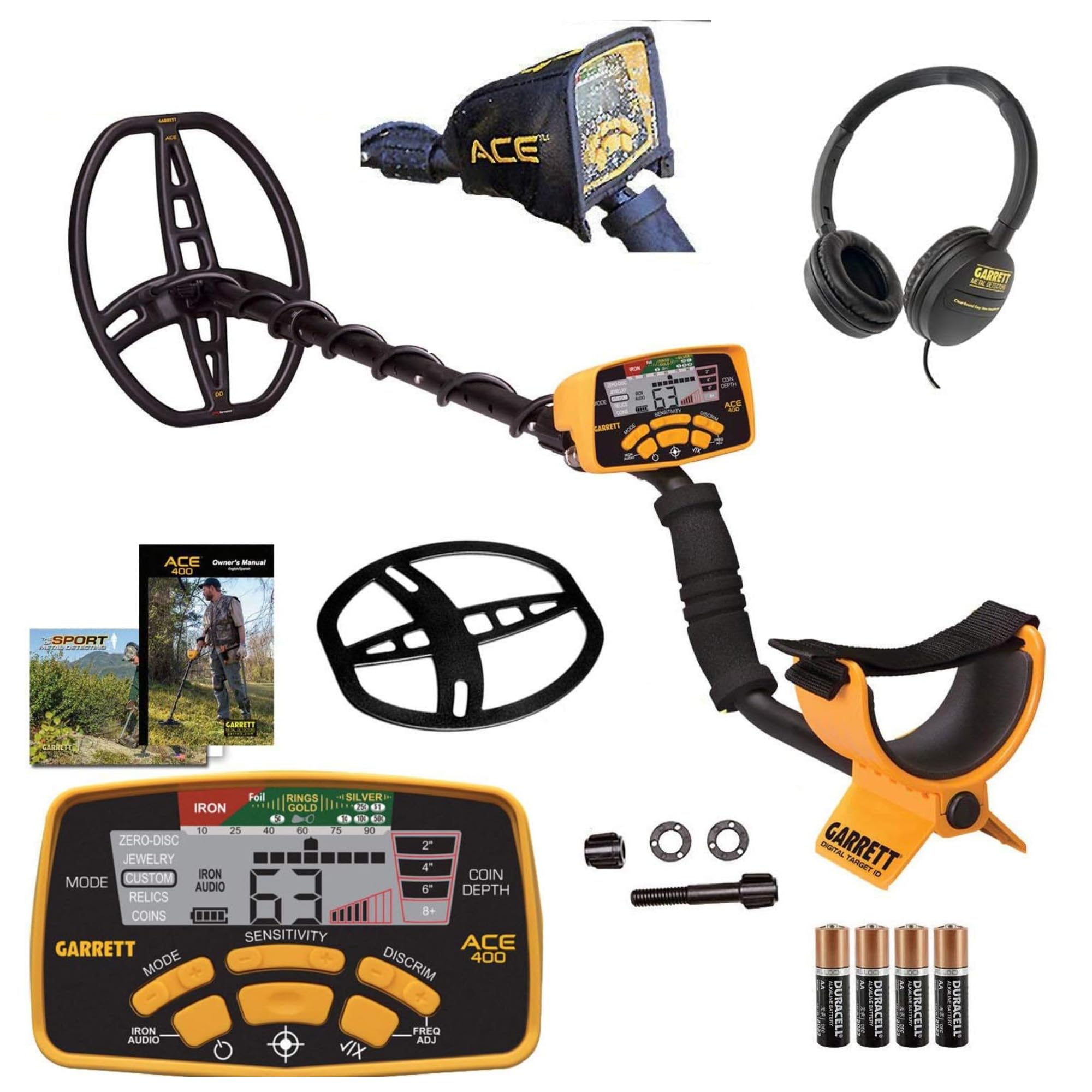
Pinpointing mode is simple to use and helps you zero in on targets without a lot of fuss. Battery life clocks in at around five hours, which is decent for a day out, though not exactly marathon-worthy.
It’s not all perfect, though. At nearly five and a half pounds, your arm will probably start to feel it after a while. The adjustable frequency is a nice touch if you’re hunting in crowded or noisy areas—less interference, less frustration.
Bottom Line
The ACE 400’s target identification and iron discrimination are genuinely useful, especially for those who hate digging up junk.
Being made in the USA and coming with extras like headphones and covers is a real bonus.
If you’re itching to start treasure hunting, here’s where you can grab the Garrett ACE 400 and see what’s hiding in your backyard.
Overview of the Garrett ACE 400 Metal Detector
This mid-range detector pulls its weight for both newbies and seasoned searchers. Weighing in at 5.48 pounds and stretching up to 51 inches, it’s comfortable enough for a few hours of searching—though you’ll feel it if you go all day.
The 0-99 digital target ID system is straightforward and takes a lot of the guesswork out of the equation. Iron Audio lets you hear trash before you dig, which is honestly a game-changer.
Key Performance Features:
- Electronic pinpointing for accurate target location
- Adjustable frequency to dodge interference
- 10 kHz operating frequency
- IP54 water resistance
You get ClearSound headphones and protective covers included. Expect about 5 hours of juice from a single lithium battery. It holds up across different ground types, though figuring out the audio signals takes a little practice.
The build feels sturdy—mostly plastic, but not flimsy. Setup is a breeze; you’ll be ready to hunt in minutes.
Digital Target Identification
The numeric display is surprisingly practical. It gives you a 0-99 reading for conductivity, so you can get a sense of what’s down there.
Target ID Performance:
- Coins: Usually 70-85
- Aluminum trash: 40-60
- Iron objects: 20-35
This helps you avoid a lot of pointless digging. The display reacts quickly and stays consistent when you sweep over the same target.
Still, it’s not perfect in tough soil. Deep or tiny items can throw off the numbers, and if there are a bunch of targets close together, the readings can get weird. But overall, it really cuts down on wasted effort. Beginners find it way less confusing than audio-only models, and experienced folks appreciate the extra confirmation.
Iron Audio Detection
Iron Audio is a must-have if you’re searching in trashy spots. It lets you hear iron before you dig, so you can skip over nails and bottle caps without second-guessing.
In the field, this feature made it much easier to tell the difference between junk and possible treasure. The audio tones are distinct enough, though you’ll need a bit of practice to really get the hang of it.
Key Benefits:
- Cuts down on digging up junk
- Lets you double-check targets with your ears
- Pairs nicely with the digital target ID
It works well with the detector’s discrimination settings, but mineralized soil can muddy the audio a bit. Still, it’s reliable in most situations.
Electronic Pinpointing Capability
Pinpointing with the ACE 400 is refreshingly simple. Switch to non-motion All-Metal Mode, and you can find the exact spot without swinging the coil back and forth.
Just press and hold the pinpoint button, and the audio ramps up as you get closer. It takes the guesswork out of recovery, especially in messy areas with lots of signals.
Key Benefits:
- No need to move the coil—just hover
- Audio gets louder as you close in
- Works for all metals during pinpointing
It’s especially helpful in crowded ground, though sometimes the audio could be clearer, especially in certain soils. Even so, it makes finding stuff a lot faster.
Adjustable Frequency for Versatile Use
One thing I didn’t expect to use as much as I did: the adjustable frequency. In spots with lots of electrical noise, being able to tweak the frequency kept things running smoothly.
The ACE 400 runs at 10 KHz, but you can shift the setting to dodge interference from power lines or other detectors. This is a lifesaver at group hunts or in parks with lots of electrical stuff nearby.
Key Benefits:
- Fewer false signals from interference
- Multiple detectors can work together without chaos
- Keeps accuracy up, even in tricky spots
Changing the frequency is easy—just a couple button presses. Sometimes finding the sweet spot takes a little fiddling, but it’s usually quick. Only really strong interference might still give you trouble.
Included Accessories and Added Value
Garrett throws in some genuinely useful extras. The ClearSound Easy Stow headphones are more comfortable than you’d expect and fold up neatly when you’re done.
Key Included Items:
- ClearSound Easy Stow Headphones – Comfy, foldable
- ACE Environmental Cover-Up – Shields the control box from weather
- Searchcoil Cover – Protects the coil from rocks and dirt
The environmental cover is snug and keeps the control panel clean and dry. Handy if you get caught in a drizzle or are hunting on dusty trails.
The searchcoil cover is basic but tough, taking the brunt of bumps from rocks and roots. These extras save you from having to buy more stuff right away.
Ease of Use for Beginners and Enthusiasts
Setup is painless, and the controls are intuitive. Even if you’ve never used a detector, you’ll probably be finding stuff within your first outing.
Beginner-Friendly Features:
- Clear 0-99 numeric target ID
- Iron audio to skip junk
- Pinpointing mode for fast target location
The learning curve is pretty gentle. Most folks report finding things right away, though learning the audio tones takes a little time.
More experienced users will appreciate being able to tweak the frequency and use pinpointing for quick recoveries.
Minor drawbacks: You’ll need to get used to the different sounds, which can be a bit much at first. The ACE 400 works well for both casual and more serious users, though beginners might need a few outings to really feel at home with all the audio cues.
Pros and Cons
After putting the ACE 400 through its paces, here’s what stands out—good and bad.
Pros
The digital target ID is genuinely helpful. It takes a lot of the guesswork out and helps you avoid digging up junk. Iron audio saves you time and effort by letting you hear trash before you commit.
Pinpointing mode is a real time-saver. It’s quick and accurate, so you’re not spending ages digging random holes.
Frequency adjustment is a lifesaver in busy areas. You’ll get fewer false signals and less frustration.
The included accessories are actually useful, not just filler. The headphones are clear, and the coil cover keeps your gear in good shape.
Build quality is solid—doesn’t feel cheap, but it’s not a brick either. Comfortable enough for longer hunts, and you can tell it’s built to last.
Cons
| Issue | Impact |
|---|---|
| Learning curve | Takes practice to really “hear” what’s under the ground |
| Ground balance | Needs manual tweaking in tough soils |
The ACE 400 isn’t at its best in mineral-heavy ground without some manual balancing. You’ll have to learn how to adjust it for your area, which isn’t ideal for total beginners.
Battery life is just okay, especially if you use headphones a lot. Bring spares if you’re out all day.
If you set discrimination too high, you might accidentally filter out good stuff. It takes some trial and error to find the right balance.
Customer Reviews and Experiences
People seem genuinely happy with the ACE 400. Beginners say they found stuff right away, and the detector feels sturdy and reliable.
Common Positive Feedback:
- Simple controls, even for first-timers
- Manageable weight for long hunts
- Picks up a wide range of metals
- Headphones are a nice bonus
Families enjoy using it together—kids get into the treasure hunt, and parents appreciate the accuracy. Folks upgrading from cheaper models notice a real difference in performance.
Areas for Improvement:
- Some wish a digging tool was included
- Audio signals take some getting used to
Battery life gets decent marks, and the weight isn’t a dealbreaker for most. The waterproof coil is a plus for different terrains. With thousands of positive reviews, it’s clear most users would buy it again.
Frequently Asked Questions
If you’re considering the ACE 400, you probably have some questions. Here’s what comes up most often.
What are the common issues users encounter with the Garrett ACE 400?
Battery life is the main gripe. Expect about 5 hours per battery, so you’ll need extras for longer outings.
Some folks notice false signals in mineral-rich soils—the detector can mistake ground minerals for targets, which can get annoying.
The weight can sneak up on you during long hunts. At 5.48 pounds, it’s not featherlight, especially for kids or older users.
How does the Garrett ACE 400 differ from its predecessor models?
The ACE 400 brings an upgraded digital target ID with a 0-99 scale. Older models weren’t as precise, making it harder to tell what you’d found.
Iron Audio is new here—you can now hear iron before you dig, which saves a ton of time and hassle.
Electronic pinpointing is another big step up. The all-metal pinpoint mode is much more accurate than what you got with earlier ACE models.
What type of terrain is the Garrett ACE 400 best suited for?
Parks and recreational spots are a sweet spot for this detector. Its adjustable frequency can help cut down on interference from all those electrical sources you find in busy places.
Beach sand? Not bad at all. The coil handles wet sand, just don’t dunk it in water—water resistance is limited, so wading is out.
Terrain Performance:
| Terrain Type | Performance Level | Notes |
|---|---|---|
| Parks/Fields | Excellent | Minimal interference |
| Beach Sand | Good | Wet sand only |
| Mineralized Soil | Fair | May cause false signals |
| Rocky Ground | Poor | Difficult target recovery |
Can the Garrett ACE 400 reliably detect smaller gold nuggets?
With its 10 KHz frequency, you’ll get some sensitivity to small gold, but honestly, it’s much more in its element with bigger pieces—think rings or chunky jewelry rather than tiny flakes.
Gold’s tricky. If you’re after nuggets under a gram, especially if they’re buried a bit, results can be hit or miss. Depth and size both matter a lot.
The digital target ID is useful for narrowing things down, but you’ll need a bit of practice to tell gold apart from other metals like aluminum or brass. It’s not always obvious.
How deep can the Garrett ACE 400 detect metal objects?
For coins, you’re usually looking at 8-10 inches in average soil—sometimes a bit more if conditions are just right. Bigger stuff, like cans or tools, can pop up at 12-18 inches.
Soil makes a big difference. Mineralized ground can really cut down your depth, while clean sand lets you reach deeper.
The coil size matters too. The standard one is solid for most hunts, but if you’re chasing extra depth, there are bigger coils out there that’ll get you a bit more reach.
What features make the Garrett ACE 400 stand out from other metal detectors in its price range?
That digital target ID—running on a 0-99 scale—really gives you a sharper sense of what’s under the coil. Honestly, it’s a step up in precision compared to a lot of detectors in this bracket, and it helps you decide whether to dig or just keep walking.
Iron Audio is a game-changer, especially if you’re tired of wasting time on junk in those trash-heavy spots. Most detectors around this price don’t offer anything like it, so if you’re hunting parks or old home sites, you’ll probably notice the difference right away.
Being able to tweak the frequency? That’s surprisingly handy. You can cut down on interference from power lines, other detectors, or random electronics nearby, which is something you don’t usually get with fixed-frequency machines.
One more thing: the package extras. Getting ClearSound headphones and a searchcoil cover tossed in saves you a bit of cash—other brands often make you buy those separately.


