
Bookshelf speakers deliver high-quality audio in a compact form that fits into most living spaces without dominating the room. Unlike soundbars or portable Bluetooth speakers, bookshelf speakers are designed for people who want serious sound reproduction for music, movies, or gaming but don’t have space for large floor-standing towers. They work with stereo receivers, amplifiers, or integrated connections to create a listening experience that reveals depth in recordings. Selecting the right powered bookshelf speakers can also simplify your setup by removing the need for external hardware.
The term “bookshelf” can be misleading since these speakers rarely belong on actual bookshelves. Most perform best when placed on dedicated stands or sturdy surfaces at ear level, away from walls and corners that can muddy the bass response. Passive bookshelf speakers require an external amplifier or receiver, while powered models have built-in amplification and often include convenient features like Bluetooth connectivity or multiple input options.
Size, power handling, and whether the speakers are passive or powered are the most important factors to consider when choosing bookshelf speakers. Room size matters too, as smaller spaces can make do with less powerful speakers while larger rooms need more output to fill the space effectively. Build quality, driver materials, and cabinet construction all influence how accurate and pleasant the sound will be. This guide covers the best bookshelf speakers across different price ranges and use cases, along with what to look for when making a purchase.
Best Bookshelf Speakers
Below is the full list of the best bookshelf speakers. These models were selected based on sound quality, build construction, and overall value. Our list includes everything from high-end monitors to budget bookshelf speakers for cost-conscious listeners.

Wharfedale Diamond 12.1

The Wharfedale Diamond 12.1 presents a solid option for listeners seeking capable bookshelf speakers with traditional performance characteristics at a moderate price point.
Pros
- Five-inch driver provides substantial bass response for a compact bookshelf design
- Available in three finish options to match different room aesthetics
- Compatible with various audio sources including smartphones and turntables
Cons
- Limited customer feedback makes long-term reliability harder to assess
- Requires separate amplification to reach full 100-watt potential
- Heavier than many competitors at over 32 pounds for the pair
The Diamond 12.1 delivers audio through a two-way configuration combining a five-inch woofer with a one-inch tweeter. This pairing handles frequencies up to 20 KHz, covering the essential range for music reproduction. The aluminum construction adds durability while keeping resonance under control.
These speakers measure approximately 11 inches wide and 12 inches tall, fitting comfortably on most shelves or stands. The rectangular design maximizes internal volume without dominating visual space. Three wood veneer options let buyers coordinate with existing furniture.
Power handling reaches 100 watts, though users need an external amplifier to drive them properly. The 2.0 channel setup works well for stereo listening in small to medium rooms. Connection flexibility accommodates both vintage and modern equipment through auxiliary inputs.
Build quality appears substantial given the weight distribution across the pair. The specifications suggest best bookshelf speakers territory for those prioritizing traditional design over wireless convenience. Shelf mounting remains the intended installation method, though compatible stands expand placement options.

- Exclusive Slatefiber technology: dynamic listening and consistency across the Theva range
- Compact, sleek and harmonious design to suit any room
- Optional stand available, tilted for Time Alignment
Focal Theva N°1
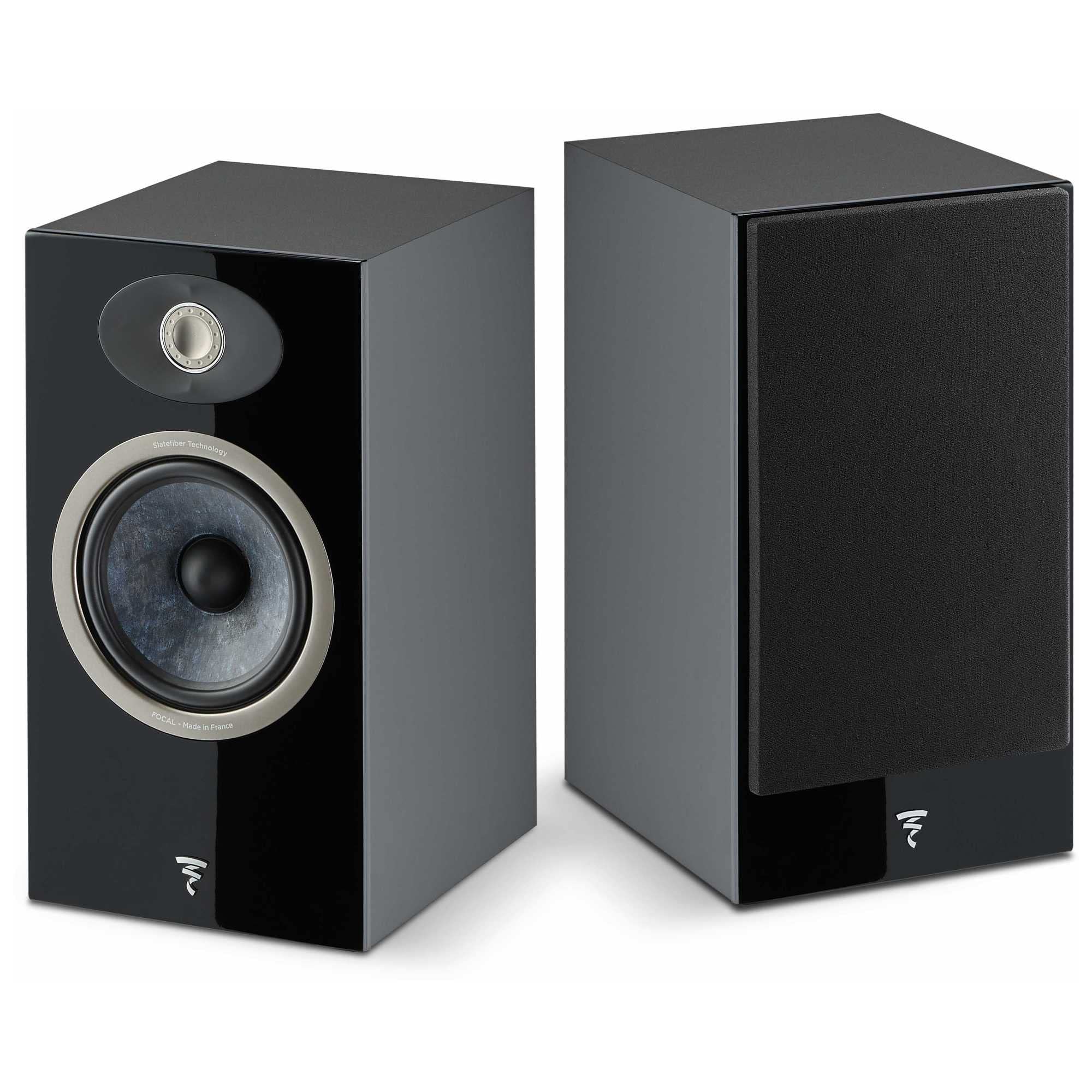
The Focal Theva N°1 delivers warm, room-filling sound with balanced performance across frequencies, making it a compelling choice for listeners seeking quality audio in a compact design.
Pros
- Slatefiber technology provides dynamic sound with consistent tonal balance
- Compact dimensions fit easily into smaller spaces without sacrificing audio quality
- Aluminum-magnesium TNF tweeter produces refined, detailed treble
Cons
- Limited customer feedback makes long-term reliability harder to assess
- Rear-ported design requires careful placement away from walls
- Passive design necessitates purchasing a separate amplifier
The Theva N°1 stands out with its proprietary Slatefiber driver material, which forms the foundation of its 6.5-inch bass and midrange driver. This technology contributes to a presentation that feels both lively and coherent throughout the frequency spectrum.
Focal pairs the Slatefiber woofer with an aluminum-magnesium tweeter that handles high frequencies with precision. The 1-inch dome tweeter aims for a soft yet detailed treble response that avoids harshness during extended listening sessions. This combination works to create a soundstage that feels open rather than congested.
The cabinet design incorporates a sleek modern aesthetic with an optional tilted stand for time alignment. Build quality appears solid with the addition of a front panel that enhances the overall construction. At 15.4 pounds per speaker, the weight suggests substantial internal bracing.
These speakers handle 100 watts of power and operate at 8 ohms impedance, making them compatible with most amplifiers. The rear bass reflex port enhances low-frequency extension but requires adequate spacing from walls for optimal performance. The compact footprint makes them suitable for desk setups or living rooms. Unlike many powered bookshelf speakers, these passive units require a dedicated amplifier to provide the necessary current for their drivers.
The 4.7 rating from a small number of reviews suggests strong initial satisfaction among buyers. Users transitioning from studio monitors particularly note the warmer tonal balance these speakers provide. The Theva N°1 positions itself as a best Hi-Fi option for those prioritizing musicality over clinical accuracy.
Connection options include standard binding posts that accept banana plugs or bare wire. The speakers work with various source components including computers, gaming consoles, televisions, and dedicated audio equipment. This versatility makes them adaptable to different use cases beyond pure music reproduction.

- BIGGER TRACTRIX HORN: A new, larger 90° x 90° silicone composite hybrid Tractrix horn provides crisper, clearer sound.
- LINEAR TRAVEL SUSPENSION (LTS) TITANIUM DIAPHRAGM TWEETER: The exclusive 1” LTS minimizes distortion for enhanced, detailed performance.
- VENTED TWEETER DESIGN: The vented tweeter housing enhances the detail in what you hear.
Klipsch RP-600M II

These speakers pack floorstanding tower technology into a compact bookshelf design, making them an excellent choice for anyone wanting high-end sound without dominating their space.
Pros
- Larger horn design provides remarkably clear and detailed sound across frequencies
- Copper-spun woofers deliver surprisingly powerful bass for a bookshelf design
- Bi-wiring and bi-amping capability offers flexibility for enthusiasts seeking optimal performance
Cons
- Bright upper frequencies may cause listening fatigue for some users during extended sessions
- Requires quality amplification and careful positioning to achieve optimal sound
- Higher sensitivity rating doesn’t translate to noticeably louder output compared to competitors
The RP-600M II represents Klipsch’s effort to bring premium audio technology down to a more manageable form factor. The expanded Tractrix horn and vented tweeter housing work together to create a sound stage that feels larger than the physical cabinet suggests.
These speakers shine when it comes to clarity and detail retrieval. The updated Cerametallic woofers handle midrange frequencies with minimal distortion, while the titanium diaphragm tweeter brings out subtle details in vocals and instruments. When properly paired with a subwoofer, they fill medium-sized rooms effectively.
The cabinet construction uses furniture-grade materials that look appropriate in living spaces beyond dedicated theater rooms. Magnetic grilles attach cleanly when a more subdued appearance is preferred. The Tractrix port geometry allows bass frequencies to move efficiently, though dedicated audiophiles will still want to add a subwoofer for full-range reproduction.
Sound characteristics lean toward the analytical side with emphasized high frequencies. This signature works well for home theater applications where dialogue clarity matters, though music listeners accustomed to warmer speakers may need time to adjust. The bi-wiring terminals provide an upgrade path for those willing to experiment with separate amplification for different frequency ranges.
Build quality feels substantial at 18 pounds for the pair. The 6.5-inch driver size strikes a balance between compact dimensions and acoustic capability. These bookshelf speakers that actually sound great deliver performance that competes with some tower designs while fitting on stands or shelves.

- COMPACT BOOKSHELF SPEAKER - With the acquired tech of our award-winning 800 Series Diamond range and Flowport technology assisting for solid bass, the Bowers & Wilkins 707 S2 2-Way Standmount Loudspeaker's compact design makes it ideal for smaller areas
- CLEANER AUDIO WITH BETTER BASS - With Bowers & Wilkins' Flowport technology, this standing speaker produces solid bass and prevents the turbulent "chuffing" that can be created by standard ports. Includes a two-piece foam plug to adjust bass response
- HIGH-QUALITY SOUND WITH SHARPER DETAILS - The 707 S2 bookshelf speaker features a Decoupled Carbon Dome Tweeter that is purpose-built for the 700 series. It reveals clarity and detail in great vocal performances, and delivers well-balanced sound
Bowers & Wilkins 707 S2

The Bowers & Wilkins 707 S2 delivers studio-grade performance in a compact package that makes it a strong contender among the best bookshelf speakers for smaller spaces.
Pros
- Decoupled Carbon Dome Tweeter provides exceptional clarity for vocals and high frequencies
- Continuum cone technology borrowed from the premium 800 Series ensures accurate midrange reproduction
- Flowport design reduces turbulence and enhances bass response in a compact enclosure
Cons
- Stands are sold separately and necessary for optimal performance
- 30-watt output may require a capable amplifier to reach full potential
- Premium pricing puts these speakers above entry-level options
The 707 S2 incorporates technology from Bowers & Wilkins’ flagship lineup into a more accessible form factor. The 1-inch Carbon Dome Tweeter sits independently from the cabinet, which helps minimize unwanted vibrations that can muddy detail. This design choice pays dividends when listening to vocal-heavy tracks or acoustic instruments.
The 5-inch Continuum cone handles midrange and bass duties with composure. This driver uses a composite construction method developed for higher-end models, which translates to better control and precision across a wide frequency range. The material strikes a balance between rigidity and damping characteristics.
Flowport technology addresses a common issue with compact speakers: port noise. The specialized port design allows air to move freely without creating the turbulent sounds that standard ports can produce. A two-piece foam plug comes included for those who want to adjust the bass response based on room placement or personal preference.
Voice-matching with other 700 Series speakers opens up possibilities for building a cohesive surround sound system. The 707 S2 can work as front channels, surrounds, or stereo speakers depending on the setup. The gloss black finish and solid construction give these speakers a polished appearance that suits modern living spaces.
The 8-ohm impedance and specifications suggest these speakers pair well with quality amplifiers. While the compact design makes them ideal for smaller rooms, the performance capabilities extend beyond what the size might suggest. Dedicated stands help position the speakers at the correct listening height and provide stability for the 13.2-pound cabinets.

- METAMATERIAL ABSORPTION TECHNOLOGY - MAT absorbs 99% of unwanted sound from the rear of the tweeter, eliminating distortion for purer, more natural sound than conventional bookshelf speakers can deliver
- 12TH-GENERATION UNI-Q DRIVER - 25mm vented aluminium dome tweeter sits at the acoustic centre of the 5.25in midbass cone, creating a single point source that spreads detailed, accurate sound evenly across the room
- AUDIOPHILE PASSIVE DESIGN - 8 ohm nominal impedance with 40-100W recommended amplifier power; frequency range 47Hz-45kHz (-6dB) reveals the depth and detail in every recording

KEF LS50 Meta

These speakers deliver exceptional clarity at moderate listening levels, making them ideal for smaller spaces where precision matters more than room-shaking volume.
Pros
- Metamaterial Absorption Technology eliminates 99% of unwanted rear sound waves for cleaner audio
- 12th Generation Uni-Q driver provides outstanding imaging and detail at comfortable volumes
- Time and phase coherent design creates accurate soundstage positioning
Cons
- Limited bass response from the compact 5.25-inch driver may disappoint those expecting deep low-end
- Requires a quality amplifier with substantial power reserves to perform at their best
- Not designed for high-volume listening or larger rooms
The LS50 Meta stands out among best bookshelf speakers through its innovative approach to controlling cabinet resonance. KEF’s Metamaterial Absorption Technology addresses a common problem where sound from the back of the driver colors the overall presentation. This results in a notably clean midrange that excels with vocals and acoustic instruments.
The signature Uni-Q driver arrangement places the tweeter in the center of the woofer, creating a single point source. This configuration helps the speakers disappear in the room, producing precise imaging that reveals exactly where each instrument sits in the mix. The aluminum dome tweeter extends smoothly into the high frequencies without harshness.
Power requirements deserve consideration. While rated at 200 watts maximum, these speakers need a capable amplifier to reach their potential. Pairing them with entry-level amplification often leaves performance on the table, as they require adequate current delivery to maintain control and dynamics.
Bass extension reaches down to 47Hz, which sounds adequate on paper but translates to modest low-frequency presence in real-world use. The compact cabinet and driver simply cannot move enough air for deep bass. Many listeners find a subwoofer necessary to fill out the lower octaves, particularly for electronic music or movies.
The rectangular cabinet features a modern aesthetic that suits contemporary spaces. Build quality reflects the premium positioning, with solid construction and attractive finishes. At 17.2 pounds per speaker, they feel substantial despite their compact footprint.
These speakers shine in nearfield setups where listeners sit relatively close. The coherent driver design rewards this placement with detail retrieval that competes with significantly more expensive options. Critical listeners working at a desk or in a small room will appreciate what the LS50 Meta brings to the table.
Buying Guide
Speaker Size and Room Dimensions
The physical size of bookshelf speakers directly affects their sound output and bass response. Larger cabinets typically produce deeper bass, while smaller units fit better in compact spaces.
Buyers should measure their available space and consider the room size where speakers will be used. A small room may not benefit from oversized speakers, while a large space might make compact models sound inadequate.
Power Handling and Amplification
Power handling specifications indicate how much wattage speakers can manage. This measurement appears as RMS (continuous) and peak power ratings.
Matching speaker sensitivity ratings with amplifier output ensures optimal performance. Higher sensitivity speakers (above 88 dB) require less power to achieve the same volume as lower sensitivity models.
Frequency Response
This specification shows the range of audio frequencies a speaker can reproduce, measured in Hertz (Hz). Most bookshelf speakers range from 50-60 Hz on the low end to 20,000 Hz on the high end.
Lower frequency numbers indicate better bass reproduction. However, frequency response alone doesn’t guarantee sound quality.
Impedance Ratings
Speaker impedance, measured in ohms, affects compatibility with amplifiers and receivers. Common ratings include 4, 6, and 8 ohms.
Buyers must verify their amplifier can handle the speaker’s impedance rating. Mismatched impedance can cause poor sound quality or equipment damage.
Port Design
Speakers come in ported or sealed designs. Ported speakers use vents to enhance bass response and efficiency. Sealed designs offer tighter, more accurate bass but may require more power.
Port placement matters for positioning flexibility. Front-firing ports allow placement closer to walls than rear-firing designs.
Frequently Asked Questions
Buyers often wonder about specific price points, performance comparisons, and optimal configurations when selecting bookshelf speakers. These questions address common concerns about value, compatibility, and sound quality across different use cases.
What are the top bookshelf speakers under $1000 for audio enthusiasts?
For audio enthusiasts looking for top bookshelf speakers under $1,000, several standout options deliver excellent sound quality and value. The Focal Theva No. 1 offers a detailed, dynamic sound with strong mids and refined treble, making it great for music-focused listening. The Klipsch RP-600M II is known for its high efficiency and energetic, punchy sound, ideal for rock, movies, and systems with lower-powered amplifiers. The Bowers & Wilkins 707 S2 provides a more balanced and accurate sound with impressive clarity and imaging, well suited for smaller rooms or nearfield setups. Finally, the KEF LS50 Meta is widely regarded as a reference-level bookshelf speaker, delivering exceptional detail, precise imaging, and a spacious soundstage for critical listening.
Which bookshelf speakers are considered the greatest of all time?
The BBC LS3/5A remains a reference standard since its 1970s introduction, prized for midrange accuracy. Klipsch Heresy, though large for a bookshelf design, achieved legendary status with its horn-loaded efficiency.
Rogers LS3/5A earned recognition in professional broadcasting and home audio. The original KEF LS50 revolutionized modern speaker design when released in 2012.
JBL L100 Century became iconic in the 1970s with its distinctive blue baffle and energetic sound. These classics influenced countless modern designs and established benchmarks for their respective eras.
How do bookshelf speakers compare to tower speakers in terms of performance?
Tower speakers typically produce deeper bass due to larger cabinets and multiple drivers. Bookshelf speakers excel in imaging precision and work better in smaller rooms where space is limited.
Towers generally create a larger soundstage and play louder without strain. Bookshelf models offer more flexible placement options and cost less at comparable quality levels.
Bass response represents the most significant performance difference. Many listeners pair bookshelf speakers with subwoofers to match tower speaker low-frequency output.
Tower speakers often provide better sensitivity ratings, requiring less amplifier power. Bookshelf speakers can match or exceed tower speakers in midrange clarity and detail retrieval.
What are the recommended bookshelf speakers for a high-quality PC audio setup?
Audioengine A5+ offers convenience with 150 watts total power and multiple inputs including USB. These are excellent examples of powered bookshelf speakers that eliminate the need for an external receiver. Kanto YU6 also provides balanced sound with built-in amplification.
PreSonus Eris E5 BT delivers studio monitor accuracy at a desktop-friendly size. The Edifier S2000MKIII combines optical, coaxial, and USB inputs with wireless remote control.
Passive options like the PSB Alpha P5 paired with a compact amplifier provide upgrade flexibility. KEF LSX II wireless speakers integrate streaming capabilities with room-filling sound.
Desktop placement requires speakers with front-firing ports or sealed designs. Near-field listening distances of 3-4 feet work best for bookshelf speakers at a desk.
Can you suggest bookshelf speakers that provide excellent sound quality without breaking the bank?
Finding high-quality budget bookshelf speakers is easier than ever. ELAC Debut 2.0 B6.2 delivers remarkable performance around $300 with Andrew Jones’s engineering. Polk Audio Monitor XT20 also offers balanced sound under $200.
Jamo S803 provides Danish design and clear sound for approximately $150. Edifier R1280T powered speakers cost under $100 while maintaining decent audio quality.
Sony SSCS5 three-way design sells for about $150 and handles various music genres well. Dayton Audio B652-AIR costs under $50 and works for budget-conscious beginners.
These affordable options require realistic expectations regarding bass extension and maximum volume. Proper placement and room treatment improve performance regardless of price point.
Which bookshelf speakers should I consider if I’m looking for a setup with a subwoofer?
The ELAC Debut B6.2 integrates seamlessly with subwoofers due to its controlled low-frequency rolloff. KEF Q150 works well with subs because of its tight, well-defined bass transition.
Speakers with smaller woofers like the Buchardt S400 MKII cross over to subwoofers more coherently. The Ascend Acoustics CBM-170 SE designed specifically for subwoofer pairing delivers excellent midrange focus.
Look for speakers with bass response that rolls off around 60-80 Hz for optimal subwoofer integration. Matching the crossover frequency prevents gaps or overlap in frequency response.
Sealed cabinet designs like the SVS Prime Bookshelf blend more naturally with subwoofers than ported models. Setting the subwoofer crossover between 60-80 Hz typically produces the smoothest results with bookshelf speakers.


