
Trying to revive those old family photos tucked away in boxes? The KODAK Slide N SCAN is a handy way to digitize years’ worth of film without resorting to expensive scanning services or wrestling with complicated hardware.
It’s built to handle a range of formats—135, 126, and 110 films plus slides—so most people’s collections are covered. The 5-inch LCD screen is genuinely useful for previewing shots as you go, so you can skip the blurry or overexposed ones before clogging up your SD card.
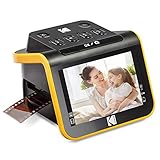
- SAVE OLD PHOTO MEMORIES: 1422MP Digital Film Scanner Lets You View, Edit and Convert Your Old Color and BandW Negatives 135, 110, 126mm and 50mm Slides 135, 110, 126mm to Digital Files and Save Directly to SD Card (NOT INCLUDED)
- 5” LCD DISPLAY WITH GALLERY MODE: Features Large, Crystal-Clear Screen with Wide Viewing Angle for Instantly Previewing and Editing Photos | Great for Sharing with Friends and Family or Using as an Elegant Digital Picture Frame in Home or Office
- CONVENIENT EASY-LOAD FILM INSERTS: Quick-Feeding Tray Technology Allows for Continuous Loading Action, Making Scanning Fast and Simple Includes 50mm Slide Holder, Adapters for 135, 110 and 126 Films, Cleaning Brush, USB and HDMI Cables

The quick-feeding tray system makes batch scanning manageable, though you’ll still spend time lining up each photo. One-touch scanning is about as easy as it sounds, popping out 22MP JPEGs straight to your SD card.
Build quality is decent for the price, and all the main adapters are in the box. Editing tools are basic—think brightness and color tweaks—but they’re sometimes enough for a quick fix.
Some people run into alignment headaches with certain film types, and scanning a big archive is definitely a test of patience. Also, the LCD doesn’t always match the colors of the final digital file, which is a little annoying but not a dealbreaker.
Overview: KODAK Slide N SCAN Film & Slide Scanner Digitizer
After some hands-on time, this compact digitizer turns out to be exactly what it looks like—a simple, no-fuss device that gets the job done. Plug it in, pop in your film, and you’re off. No software drama.
Key Performance Areas:
| Aspect | Performance |
|---|---|
| Setup | Ready to use immediately |
| Film Types | Handles 135, 126, 110 formats |
| Display | Clear 5-inch LCD screen |
| Speed | Quick scanning process |
You get 22MP digital files—good enough for online sharing or small prints. How good they look depends a lot on the condition of your film. Darker slides, especially, might need some touch-ups afterward.
Adapters are snug and secure. You can tweak color and brightness as you scan, but honestly, most images will benefit from a quick pass through photo editing software later.
Color accuracy isn’t on par with pro lab scans, so if you’re chasing perfection, you’ll notice some shifts. But for bulk scanning, this thing moves fast.
Effortless Conversion of Negatives and Slides
Swapping old film for digital files is pretty painless with the quick-loading tray system. Just feed your film in, and you don’t have to keep fiddling with settings or awkward holders.
It takes three film formats plus slides, and switching between them is as simple as swapping adapters. Each one clicks into place, so there’s not much guesswork.
Key conversion features:
- One-button scanning with automatic enhancement
- Direct saving to SD cards up to 32GB
- Film type selection for optimized results
- Color and brightness adjustments available
Once loaded, you just hit scan and watch your memories show up as 22MP digital files. The built-in software does most of the heavy lifting, but you can still make manual tweaks if you want.
Large 5″ LCD Display and Gallery Mode
The screen is honestly one of the features that makes a difference. It’s big enough that you’re not squinting, and you can actually see if a scan turned out sharp or if there’s dust you missed.
Display Quality:
- Sharp image preview capability
- Adequate brightness for indoor lighting
- Responsive touch navigation
Flipping through your scans is pretty intuitive, and you can spot issues before you save them. If you’re under bright lights, though, you might have to angle it to dodge glare.
The gallery lets you organize recent scans, but it’s not fancy. Still, being able to catch mistakes right away is a big plus.
Fast and Simple Loading with Quick-Feeding Trays
Loading film is way less fiddly than with some other scanners. The quick-feeding tray lets you slide negatives and slides through with minimal hassle.
Continuous loading is a real time-saver if you’re working through a stack. Just keep feeding strips in, and you don’t have to stop every time to re-align.
What’s included for different formats:
- 50mm slide holder
- 135 film adapter
- 110 film adapter
- 126 film adapter
Adapters snap in and out easily, though you’ll have to pause to swap them if you’re changing formats. They feel sturdy, and film stays put while scanning.
Intuitive One-Touch Editing and Enhancement
Editing is as simple as it gets. There’s a single scan button, and you don’t have to wade through endless menus.
Key editing features include:
- Film type selection – Pick your film or slide format
- Color and brightness adjustment – Tweak with basic controls
- Automatic enhancement – The scanner tries to improve things on its own
Color adjustment helps with slides that have aged or shifted, and brightness tweaks are handy for underexposed shots.
The editing tools are basic, so if you’re after pro-level restoration, you’ll want to use real photo software. But for most people, it’s enough to get decent results without a steep learning curve.
Images save straight to an SD card, which keeps things simple.
Broad Compatibility and Modern Design
Dealing with multiple film formats is way less of a headache here. The Slide N SCAN covers 135, 126, and 110 film, plus standard slides, all with the adapters included.
It connects via USB Type-C and HDMI, so it’ll play nice with most modern computers and displays. SD card support goes up to 32GB, but you’ll need to bring your own card.
Design Elements:
- Compact footprint—just over 5 inches each way
- Lightweight—about 16 ounces
- Clean, neutral look that won’t clash with your workspace
It looks more like a cool gadget than office gear. The only catch: it won’t save files internally. You have to have compatible storage ready before you start.
Pros and Cons
After running various film types through it, some clear upsides and a few drawbacks stand out.
Pros
Setup is a breeze—plug it in, and you’re off. The 5-inch LCD is a real help for checking your scans on the spot.
Versatility is a big win. It handles all the usual film types with included adapters that fit snugly.
It’s quick, especially for big projects. You can get through a lot of photos in a session without long waits.
| Key Advantages |
|---|
| Simple plug-and-play operation |
| Built-in color adjustment controls |
| USB-powered convenience |
| Bright, clear display screen |
The 22MP resolution is solid for web or small prints. You can make basic color tweaks right on the device.
Cons
Image quality isn’t perfect. Darker slides almost always need extra editing after scanning.
Colors can shift, especially with older film. Don’t expect lab-quality accuracy.
The scanning area is a bit cramped for delicate slides, so you have to be careful.
Speed is fine for casual use, but if you’re tackling thousands of photos, it might feel slow.
Detail capture is limited. The 22MP spec sounds great, but in practice, it’s not as sharp as some dedicated film scanners at this price.
Customer Reviews
Most users love how easy it is to get started. People mention being able to digitize old film collections right away, no headaches.
The 5-inch LCD gets a lot of praise for clarity. Folks like the USB-powered setup—no need for extra cords or adapters.
Image quality gets mixed feedback. Most are happy for web sharing and small prints, but some notice colors aren’t spot-on. Darker slides usually need more work.
| Positive Aspects | Areas for Improvement |
|---|---|
| Easy setup and use | Color accuracy issues |
| Bright, clear screen | Limited quality for enlargements |
| Multiple film format support | Darker images need editing |
If you’ve got a big collection, the speed is a lifesaver. Some users have processed thousands of slides without much trouble.
Overall, the 4.4-star rating seems fair—people are happy with the convenience, even if the quality isn’t perfect.
Ideal Uses and User Experience
This scanner shines for folks wanting to digitize a big stash of old film. It’s compatible with 35mm negatives, most slide formats, and even those odd 110 and 126mm films.
The 5-inch LCD makes it easy to check images before saving. Basic color and brightness tweaks can be done right on the device, so you don’t have to fire up editing software unless you want to.
Setup is dead simple—just plug it in and go. Adapters fit securely, and the quick-feeding tray makes scanning in batches pretty painless.
It’s best for web sharing and small prints, not professional archiving. You might notice some color shifts, and dark images often need extra editing.
The compact size means it fits anywhere, and you can move through hundreds of photos in a reasonable amount of time.
Frequently Asked Questions
After using this scanner and reading what others say, some common questions come up.
What are the main differences between the Kodak Slide N Scan 5 and 7 models?
The 5 model has a 5-inch LCD and covers 135, 110, and 126mm films plus slides. It’s solid for basic digitizing, with 22MP output.
The 7 model bumps up the screen size but keeps most of the same features. Both use the same film inserts and editing tools. Really, it’s about the display—scanning quality and supported formats are pretty much identical.
How does the image quality of the Kodak Slide N SCAN compare to the Plustek scanners?
The Slide N Scan does a fair job for web sharing or small prints, but sometimes the colors look a bit off from the originals—especially if you’re nitpicky or have the real thing right next to you.
Plustek scanners, on the other hand, tend to pull out sharper details and nail colors a bit better. Still, the Kodak’s a breeze to use, and it’s quick—no computer needed. People with big boxes of slides seem to appreciate how it can chew through a couple thousand slides without too much fuss.
Quality Trade-offs:
- Kodak: Fast, easy, solid for big batches
- Plustek: Sharper images, more accurate colors, but takes its time
Is an SD card necessary to operate the Kodak Slide N SCAN?
You don’t technically need an SD card just to fire it up or preview your slides. The built-in 5-inch screen lets you see what you’ve got, and you can tinker with colors right there, as long as it’s plugged in via USB.
But if you want to actually save scans, you’ll need an SD or SDHC card (up to 32GB). Without one, you’re basically just browsing—nothing gets saved, so you can’t keep any of your scans.
What are the file size outputs when using the Kodak Slide N SCAN?
Scans come out as 22MP JPEGs with 24-bit color, which is more than enough for most people. File sizes bounce around between 8 and 15MB each, depending on how busy the image is.
If you’re planning to scan a mountain of slides, keep storage in mind. A 32GB SD card will hold somewhere in the ballpark of 2000 to maybe 4000 images. JPEG keeps things manageable, and honestly, it’s fine for most uses unless you’re a hardcore archivist.
Can the Kodak Slide N SCAN be considered a good alternative to professional scanning services?
For everyday digitizing, it’s a pretty practical option—especially if you’ve got a lot to get through and don’t want to pay a fortune. It’s way cheaper than sending stacks of slides off to a service.
That said, pro services do give you better image quality, color tweaks, and dust cleanup. With the Kodak, you might need to do a little post-processing, especially if you’re dealing with really dark slides or stuff that’s faded over the years.
Best Use Cases:
- Digitizing big family collections
- Sharing online or using digital frames
- Making backup copies of old photos
If you’ve got precious shots that need to be preserved perfectly, or major restoration, professional scanning is still the safer bet.
Are there any comparable alternatives to the Kodak Slide N SCAN Film & Slide Scanner on the market?
There are definitely a few options out there in a similar price range. Plustek models, for example, do offer higher resolution, but you’ll need to hook them up to a computer and they tend to move at a slower pace.
Wolverine scanners are another contender—some of their models come with bigger screens or support a wider variety of formats. Still, honestly, not many competitors really nail the Kodak’s blend of ease-of-use and standalone functionality.
A lot of folks seem to value the Slide N Scan for its straightforward setup and that you don’t have to fuss with a computer. It’s just a pretty painless way to get your old film and slides digitized without a lot of technical headaches.