
Laptops are basically a must-have for students these days, whether you’re in high school or tackling grad school. They open up access to online resources, make note-taking less of a hassle in lectures, and—let’s be real—are the only way most of us get assignments turned in on time.
If you’re working with a tight budget, picking a laptop that actually fits your needs (and your wallet) can feel like a big deal. It’s one of those choices that can impact your whole academic groove.
Budget laptops for students have gotten a lot better in the last few years. You can now get decent performance for everyday stuff—web browsing, docs, streaming—without dropping a fortune.
A good budget student laptop falls between $400 and $700 and should keep up with the average workload, skipping the bells and whistles that just jack up the price.
When you’re shopping, battery life and build quality matter most. Students want something that’ll last through a marathon day of classes and won’t fall apart after being tossed in a backpack a hundred times.
You’ll also want enough processing power to keep up with research tabs and word docs, though if you’re doing video editing or anything wild, you might have to compromise. Screen size and weight are part of the equation too—most folks find 13 to 15 inches hits the sweet spot for usability without being a pain to carry.
Best Budget Laptops for Students
Here’s the full rundown of the best budget laptops for students right now. These picks deliver the basics: solid performance, portability, and the features you actually need, all while staying in a student-friendly price zone.
![Dell Inspiron 15 3000 3520 Business Laptop Computer[Windows 11 Pro], 15.6'' FHD Touchscreen, 11th Gen Intel Quad-Core i5-1135G7, 16GB RAM, 1TB PCIe SSD, Numeric Keypad, Wi-Fi, Webcam, HDMI, Black](https://m.media-amazon.com/images/I/51O3nNfyJPL._SL160_.jpg)
- 【15.6" Full HD Touchscreen】The 1920 x 1080 resolution boasts impressive color and clarity. IPS technology for wide viewing angles. Energy-efficient LED backlight. Designed with tiny rubber feet and bumpers on the hinge that keep it from skidding and provide additional stability.
- 【11th Gen Intel Core i5-1135G7 Processor】Ultra-low-voltage platform. Quad-core, eight-way processing provides maximum high-efficiency power to go. Your always-ready experience starts as soon as you open your device. Turn on, boot-up, and log-in quickly.
- 【16GB DDR4 RAM + 1TB PCIe SSD】16GB RAM can smoothly run your games and photo- and video-editing applications, as well as multiple programs and browser tabs all at once. A 1TB NVMe PCIe solid slate drive that leaves the power at your fingertips with the fastest data transfers currently available.
Dell Inspiron 15 3520

The Dell Inspiron 15 3520 is a solid pick for students who want a reliable laptop with plenty of storage and memory, but don’t want to overspend.
Pros
- Generous 16GB RAM and 1TB storage—multitasking and file hoarding, no problem
- Full HD touchscreen makes navigation and note-taking less of a chore
- Numeric keypad is handy for anyone wrangling spreadsheets or data
Cons
- Integrated graphics aren’t made for gaming or heavy creative work
- No backlit keyboard, so typing in the dark isn’t fun
- Some folks get units where the advertised touchscreen just… doesn’t work
This Dell Inspiron 15 3520 Business Laptop is practical for students juggling assignments, research, and online classes. The 11th Gen Intel Core i5 keeps things running smoothly, whether you’re jumping between browser tabs or hammering out a last-minute presentation.
The 15.6-inch Full HD screen is clear for reading or watching lectures. Touch is nice for quick taps, but honestly, the quality control on this feature is a bit hit-or-miss. Under four pounds, so not too much of a drag walking across campus.
Battery life lands around six and a half hours with normal use—enough for most school days, but you might be reaching for the charger during a long stretch. Express charging is a bonus, juicing up to 80% in about an hour. Ports include HDMI and several USBs, which is handy for plugging in whatever extras you need.
Windows 11 Pro is already installed, bringing better security and compatibility for school software. If you’re buying from Lanbertent, you get units with upgrades and extra testing. Definitely double-check the touchscreen when it arrives; some buyers say it doesn’t always work as advertised.

- 【High Speed RAM And Enormous Space】16GB DDR4 high-bandwidth RAM to smoothly run multiple applications and browser tabs all at once; 1TB PCIe NVMe M.2 Solid State Drive allows to fast bootup and data transfer
- 【Processor】i3-1215U Processor (6 Cores, 8 Threads, 10MB L3 Cache, Base Frequency at 0.9 GHz, Up to 4.4 GHz at Max Turbo Frequency), with Intel UHD Graphics
- 【Display】14.0-inch, FHD (1920 x 1080) 16:9 aspect ratio, IPS-level Panel, LED Backlit, 250nits, Anti-glare display
ASUS Daily Vivobook

The ASUS Daily Vivobook is a no-fuss, everyday machine that won’t break the bank. It’s a good fit for students who just want something reliable and straightforward.
Pros
- 16GB RAM means you can keep a bunch of tabs and apps open without slowdowns
- Plenty of USB ports for all your gadgets
- Just over three pounds—super easy to haul around
Cons
- 250-nit screen brightness isn’t great if you’re in a sunny spot
- Integrated graphics only handle older or basic games (no AAA gaming here)
- Viewing angles on the display can be a little fussy
The ASUS Daily Vivobook is built for students powering through essays, research, and a bit of streaming. The Intel Core i3-1215U is fine for typical schoolwork, and you get 16GB of memory plus a 1TB SSD—so you’re set for multitasking and storage.
The 14-inch FHD screen feels portable but not cramped. Anti-glare helps, but at 250 nits, you’ll probably be scooting your chair around to dodge bright lights. Not a dealbreaker, but worth knowing.
Build is more practical than fancy—mostly plastic, but that keeps it light. The port selection is decent: USB-C, HDMI, and more. Wi-Fi 6 is a nice perk for faster connections if your campus supports it.
Handles web browsing, docs, and Netflix without a hiccup. Don’t expect miracles with creative software or modern games—this is a budget laptop at heart. Battery will usually get you through a school day, but heavy users might want to keep the charger close.
Most buyers say it’s reliable for basic tasks, though some aren’t thrilled with the screen quality. If you care more about specs and price than looks, the Vivobook is worth a look for budget-conscious students.

- 【Processor】 Intel Core i3-1115G4 (up to 4.1 GHz with Intel Turbo Boost Technology, 6 MB L3 cache, 2 cores, 4 threads)
- 【Display】 15.6" diagonal, HD (1366 x 768), touch, micro-edge, BrightView, 220 nits, 45% NTSC, Touch Screen, enjoy your photos, movies, and games with the crisp quality.
- 【RAM and Storage】RAM is upgraded to 16GB high-bandwidth RAM to smoothly run multiple applications and browser tabs all at once; Hard Drive is upgraded to 1TB PCIe NVMe Solid State Drive allows to fast bootup and data transfer.
HP Pavilion 15.6″ Touchscreen Laptop

This HP Pavilion gets the job done for students who want plenty of storage and memory at a price that doesn’t sting. No fancy extras, just solid everyday use.
Pros
- 16GB RAM and 1TB SSD—multitasking and file storage are smooth sailing
- Touchscreen is handy for quick notes and navigation
- Battery lasts up to 11 hours, so you’re covered for long days
Cons
- Screen is only 1366×768—not as crisp as Full HD
- No keyboard backlight, which is kind of annoying at night
- 220-nit brightness is weak in bright rooms or outdoors
The HP Pavilion 15.6″ Touchscreen Laptop is a budget-friendly pick that puts performance first. The Intel Core i3-1115G4 is perfectly fine for papers, spreadsheets, and streaming. With 16GB of RAM, you can run multiple apps without your system getting bogged down.
The 1TB PCIe NVMe SSD means fast boot times and more than enough space for school files and media. Touchscreen is a nice bonus for note-taking apps or just browsing. You get USB-C, USB-A, and HDMI ports—pretty much everything you’d want for accessories and external displays.
Screen resolution is the main trade-off here. At 1366×768 on a 15.6-inch display, text isn’t as sharp as Full HD, but it’s still readable for most tasks. The anti-glare finish helps, but with only 220 nits of brightness, you’ll want to avoid direct sunlight. The missing keyboard backlight is a common gripe for late-night study sessions.
Build feels solid for the price and it’s not too heavy at 3.74 pounds. Windows 11 Home is ready to go out of the box. If you care more about internal specs than fancy design or a top-tier screen, this Pavilion is a competitive option for students looking to stretch their dollars.
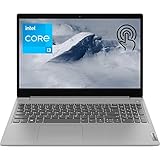
- 【High Speed RAM And Enormous Space】12GB DDR4 RAM to smoothly run multiple applications and browser tabs all at once; 256GB PCIe M.2 Solid State Drive allows to fast bootup and data transfer
- 【Processor】Intel Core i3-1115G4 3.00 GHz 2 Cores Processor (6MB Cache, up to 4.10 GHz), Intel UHD Graphics
- 【Dazzling Display】15.6" HD touchscreen display with narrow bezels
Lenovo IdeaPad 3i

The Lenovo IdeaPad 3i brings everyday performance to the table at a price that won’t make you wince. It’s a practical pick for students who just want something reliable, not fancy.
Pros
- Touchscreen display makes classroom navigation less of a hassle
- 12GB RAM is enough for juggling research and assignments
- Webcam privacy shutter is a nice touch for virtual classes
Cons
- HD resolution (1366×768) is a bit dated compared to today’s sharp screens
- Intel UHD integrated graphics aren’t up for heavy-duty apps
- System updates after setup can take quite a while
The IdeaPad 3i keeps things affordable without feeling stripped down. The Intel Core i3-1115G4 processor is fine for editing docs, browsing, and streaming. Paired with 12GB of DDR4 RAM, it doesn’t get bogged down flipping between apps or browser tabs.
There’s a 256GB PCIe SSD for storage, so booting up and saving files is quick—no waiting around. The 15.6-inch touchscreen is roomy, but if you’re used to ultra-crisp displays, this one might look a little soft.
On the connectivity side, you get two USB Type-A ports, a USB 2.0, HDMI, and an SD card reader. Wi-Fi 6 is here, so if your campus Wi-Fi supports it, speeds should be pretty good. The webcam comes with a physical privacy shutter for peace of mind during remote learning.
Build quality? Well, it’s what you’d expect from a budget laptop—platinum grey plastic, weighing in at 4.07 pounds. The touchscreen is handy for note-taking or just poking around Windows 11. Battery life will get you through a typical day of classes, but heavy users might want to keep the charger close.
Most folks say it does what it promises for schoolwork, though a few wish the trackpad felt nicer. It’s really for students focused on writing, research, and Zoom—not gaming or video editing marathons.

- Do What You Do With Exceptional Performance: The 13th Gen Intel Core i5-13420H processor goes beyond performance to let your PC do even more at once. And Intel UHD graphics distribute performance where you need it most. With 16GB LPDDR5 memory and 512GB PCIe Gen 4 SSD storage—the Aspire 5 is made to do it all.
- Clear and Comfortable Viewing: Experience crisp, lifelike colors and sharp details on the 15.6” FHD IPS touch display. You have more space to work thanks to narrow bezels. Equipped with Acer’s suite of visual technologies for dynamic color optimization and viewing comfort.
- The Design: The slim 0.71" body give the Aspire 5 a premium feel and appearance. An ergonomic hinge design lifts the body of Aspire 5 and tilts the keyboard for comfortable typing, improved cooling and a better sound experience.
Acer Aspire 5

The Acer Aspire 5 is a solid choice for students who want a capable laptop for coursework, streaming, and daily stuff—without blowing the budget.
Pros
- Handles multitasking and lots of browser tabs without a hitch
- Touchscreen with narrow bezels makes for a spacious, easy-to-use display
- Fast start-up and snappy performance keep you on track
Cons
- Integrated graphics can’t keep up with gaming or heavy creative work
- Some users have mentioned the charging port feels a bit flimsy
- Battery life might not last a whole day unplugged—jury’s still out
The Acer Aspire 5 is a best budget laptop that doesn’t really feel like you’re settling. The 13th Gen Intel processor handles student tasks easily, whether it’s writing papers or hopping on video calls. With plenty of memory and SSD storage, apps open fast and multitasking is a breeze.
If you’re making presentations or watching lectures, the touchscreen is a plus. Colors look good and text is sharp, so reading for hours isn’t so rough. Sure, the graphics won’t thrill gamers, but for school projects and streaming, it’s totally fine.
Some little details make life easier—like the raised keyboard for more comfortable typing during long study sessions. The backlit keyboard is a lifesaver for late-night work in dim dorm rooms.
It’s got all the ports you probably need, WiFi 6 for speedy connections, and a webcam that’s decent for remote classes. It’s not the lightest, but carrying it around campus isn’t a chore.
There’s a bit of worry about the charging port holding up over time, so maybe don’t yank the cord. And if you’re in engineering or want to game, you’ll want something with more graphics muscle.
Buying Guide
Performance Requirements
Think about what you’ll actually use your laptop for. Light stuff like typing and browsing doesn’t need much muscle. If you’re editing video or coding, you’ll want something beefier.
The processor sets the pace. Dual-core chips are fine for basics. If you’re running heavy apps, look for quad-core or better.
Memory and Storage
RAM matters for running lots of things at once. 8GB is the sweet spot for most students. If you’re into design or virtual machines, 16GB is better.
SSD storage is way faster than old-school hard drives. A 256GB SSD covers documents and essentials for most people.
Display and Portability
Screen size is all about trade-offs. 13 to 14-inch models are easy to carry but still comfy to use. If you’re always on the move, try to keep it under 3.5 pounds.
Battery life is huge—aim for at least 8 hours. But honestly, check real reviews; manufacturer claims can be optimistic.
Build Quality and Connectivity
Your laptop’s gonna get tossed in a bag a lot, so durability matters. Metal cases usually outlast plastic. Hinges are a common weak spot, so reinforced ones are a plus.
Ports can be a dealbreaker. USB-C is the new standard and good for charging. HDMI is handy for presentations. Make sure you’ve got what you need for your setup.
Frequently Asked Questions
Budget laptops for students usually run from $300 to $700. The best ones have Intel Core i5 or AMD Ryzen 5 chips, 8GB RAM, and 256GB SSDs. Don’t forget to check for student discounts through your school or directly from the manufacturer.
What are the top-rated budget laptops for college students in 2025?
The Lenovo IdeaPad 3i tops the list with a 12th Gen Intel Core i5 and 8GB RAM at $549. HP Pavilion 15 is similar, but with a bigger 15.6-inch screen for $599. Acer Aspire 5 is a great value pick at $499 with an AMD Ryzen 5 and 512GB SSD.
ASUS VivoBook 15 is light at 3.5 pounds and lasts about 10 hours on a charge for $529. Dell Inspiron 15 is reliable and lets you upgrade the RAM later, priced at $579.
Which budget laptops under $500 provide the best performance for student needs?
The Acer Aspire 5 with AMD Ryzen 5 5500U is strong for multitasking at $479. It comes with 8GB RAM and 256GB SSD—plenty for editing docs, browsing, and some light photo work.
Lenovo IdeaPad 1 (AMD Ryzen 3, 8GB RAM) is $399 and good for Google Workspace, Office, and streaming. HP’s 14-inch laptop with Intel Core i3 is $449 and covers basic student needs.
How can students obtain discounts or deals on budget laptops for their studies?
Most big brands—Dell, HP, Lenovo, Apple—offer 5-10% off for students if you have a .edu email or can verify your status. It’s worth the hassle.
Campus bookstores sometimes have bundles with software and extended warranties. Best Buy and Amazon usually run student deals July through September.
Refurbs from the manufacturer can be 20-30% cheaper and still come with warranties. Open-box deals at retail stores can knock $50-150 off recent models, too.
What are the recommended specifications for a college student’s budget laptop?
For basic classes, look for at least an Intel Core i3 11th Gen or AMD Ryzen 3 5000 series. If you’re in a demanding major, go for Intel Core i5 or Ryzen 5.
8GB RAM is the minimum for smooth multitasking. If you run virtual machines or heavy design apps, 16GB is safer. Storage-wise, 256GB SSD is the baseline for OS and apps.
Battery life? At least 8 hours if you don’t want to lug a charger. A 1080p screen is easier on your eyes for long study sessions.
Are there budget laptops with touchscreens that are suitable for student use?
The Lenovo Flex 5i has a 14-inch touchscreen and folds 360 degrees for $549. It’s got an Intel Core i3 and supports a stylus, which is pretty handy for notes.
HP Pavilion x360 is $599 with a convertible design and touchscreen. Acer Spin 3 gives you tablet mode and touchscreen at $649 (8GB RAM, 256GB SSD).
ASUS VivoBook Flip 14 is $579 with a touchscreen and skinny bezels. Just know these convertibles are a little heavier than regular laptops—usually by half a pound to a pound.
What is the best budget gaming laptop that is also suitable for student tasks?
The Acer Nitro 5 strikes a pretty solid balance at $699, packing NVIDIA GTX 1650 graphics alongside an AMD Ryzen 5 processor. You can run most modern games at medium settings, and it doesn’t stumble over basic productivity apps either.
The Lenovo IdeaPad Gaming 3 is right in the same ballpark, coming in at $649. It comes with 8GB of RAM and a 512GB SSD, which honestly feels like the sweet spot for students juggling work and play.
There’s also the HP Victus 15, which features an Intel Core i5 and GTX 1650 graphics for $729. All of these laptops hover between 4.5 and 5.5 pounds, so they’re not exactly featherweights, but they’re manageable in a backpack.
Expect around 5 to 6 hours of battery life for regular student tasks—enough to get through a couple classes or a study session, but you’ll probably want to keep your charger handy just in case.


