
If you’re eyeing a gaming upgrade but don’t want to empty your wallet, a mid-range graphics card like the XFX SWFT210 might just be what you’re after. This one leans on AMD’s RDNA 3 architecture, promising smoother gameplay and better visuals in the latest titles—without the sticker shock of high-end cards.
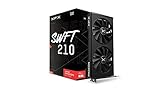
- Chipset: AMD RX 7600
- Memory: 8GB GDDR6
- XFX SWFT Dual Fan Cooling Solution

Most folks seem happy with its 1080p gaming chops and the cooling system, which actually does its job (not always a given in this price range). But if you’re dreaming of buttery-smooth 4K, it’s probably not the card for you. This one’s more at home with fast frame rates at lower resolutions.
Overview of the XFX Speedster SWFT210 Radeon RX 7600 Graphics Card
This card is aimed at gamers who want solid 1080p performance without the headache of high-end prices. AMD’s RDNA 3 architecture is at its core, focusing on efficiency and stable frame rates for modern games.
The SWFT210 sports a dual-fan cooling setup. It works, but you’ll want decent airflow in your case for best results—some users have had to tweak their builds a bit. The card itself is pretty compact and lightweight, so it’s not a pain to squeeze into smaller cases.
Pros:
- Delivers strong 1080p gaming for the price
- Power usage is reasonable
- Small footprint, easy to install
Cons:
- 4K gaming isn’t really its thing
- A few users have seen instability without solid cooling
AMD RDNA 3 Architecture
AMD’s RDNA 3 brings better power efficiency and performance-per-watt than before, thanks to a chiplet-based design that helps keep costs down, too.
You get hardware-accelerated ray tracing and improved AI image processing, so visuals are crisper and frame pacing is smoother in games that support it.
Still, while RDNA 3 is a nice leap for mid-range cards, it won’t keep up with flagship GPUs for heavy 4K workloads. But if you’re sticking to 1080p or 1440p, it’s a pretty sweet spot.
Key points:
- Strengths: Efficiency, modern rendering, good mid-range performance
- Limitations: Not built for demanding 4K gaming
Performance and Frame Rates
Fire up most modern games at 1080p and you’ll see smooth gameplay on high settings—often over 90 FPS in lighter titles. Even the more graphically intense games hold up well, though you might have to dial back from ultra settings.
People coming from older mid-range cards notice a clear jump in both speed and visuals. If you’re hoping for 1440p or 4K, though, you’ll have to compromise on settings.
Strengths:
- Handles 1080p gaming at high/ultra settings
- Stable frame rates in most games
Limitations:
- 1440p and 4K performance drop off
- Can’t match premium GPUs in raw output
8GB GDDR6 Memory
With 8GB of GDDR6, this card has enough VRAM for nearly all current 1080p games, and it’ll even handle some higher-res titles if you’re willing to tweak the settings. The memory’s fast, so load times and textures are snappy in supported games.
That said, if you’re after heavy 4K gaming or plan to use massive texture packs, 8GB might feel tight. It’s not really aimed at pro workloads, either.
Pros:
- Plenty for mainstream gaming
- Fast GDDR6 keeps things running smooth
Cons:
- 4K or memory-heavy tasks can push it to its limits
Dual Fan Cooling Solution
The dual-fan setup keeps temps under control when you’re pushing the card. Each fan works on its own, so airflow is spread out across the heatsink. That helps avoid hot spots and keeps performance steady.
Most of the time, it’s quiet enough. But crank up the graphics and the fans will let you know they’re working.
Pros:
- Good airflow, avoids overheating
- Keeps thermal performance consistent
Cons:
- Gets a bit noisy at high speeds
- Can’t match bigger triple-fan coolers for sheer cooling power
Boost Clock Up to 2655 MHz
With a boost clock reaching 2655 MHz, the card can kick into higher gear during demanding scenes, which helps maintain smoother frame rates—at least for short bursts.
But, as you’d expect, higher boost speeds mean more heat and power draw. Make sure your system’s cooling is up to it if you want to avoid throttling.
Key points:
- Upside: Quick performance spikes when needed
- Downside: Needs decent cooling for best results
If you’re the type to push your hardware, keep an eye on those temps.
Pros and Cons
Picking a graphics card in this price range is always a bit of a balancing act. The SWFT210 has a lot going for it if you’re budget-conscious, though it’s not without its quirks.
Pros
- Strong 1080p Performance – Most users get smooth gameplay at high settings, 90+ FPS in many titles
- Good Value – Stacks up well against similarly priced cards
- Efficient Cooling – Dual fans keep temps reasonable
- Compact – Fits in smaller cases
- Lower Power Draw – Less demanding on your PSU
| Strength | Benefit |
|---|---|
| Performance | Handles high settings at 1080p |
| Cooling | Dual fans keep it cool |
| Size | Works in compact builds |
| Efficiency | Uses less power than top-tier cards |
Cons
- Potential Stability Issues – A handful of users needed better airflow to avoid crashes
- Not for High Resolutions – 1440p and 4K performance drops noticeably
- Some Quality Concerns – Occasional reports of defects or early failures
- Limited Features vs. NVIDIA – Lacks things like CUDA, which some workflows need
| Limitation | Impact |
|---|---|
| Stability | May need extra airflow to stay stable |
| Resolution Scaling | Not great at 1440p/4K |
| Reliability | Small chance of defects |
| Features | Missing NVIDIA-only tools |
Customer Reviews
Most buyers seem pretty satisfied, especially with the 1080p performance and value for money. If you’re upgrading from an older card, the improvement is obvious. The efficient power use and compact size are nice bonuses, too.
A few folks ran into issues with stability until they improved their case airflow. There are also occasional complaints about defective units or hardware failures, but those seem to be the exception rather than the rule.
Common review takeaways:
- Pros: Solid 1080p gaming, good price, efficient
- Cons: Some stability gripes, rare defects, works best with strong cooling
Ideal Use Cases
If you’re building a mid-range gaming PC and care most about 1080p performance, this card fits the bill. It’s a good pick for budget builds, especially if you want to keep your power and heat output in check. The smaller footprint is handy for tight cases, but you’ll still want half-decent airflow.
For non-gaming stuff—media, light creative work—it’s fine. But if you’re doing heavy 3D rendering or need NVIDIA-specific features like CUDA, you’ll want to look elsewhere.
Frequently Asked Questions
Got questions? Here are some quick answers to what people usually ask about this card.
How does the XFX Speedster SWFT210 Radeon RX 7600 perform in gaming benchmarks?
At 1080p, it’s smooth sailing in most modern games at high settings. It’s not going to beat high-end cards like the RX 7900 XTX, but it holds its own among mid-range options, especially in AMD-optimized titles.
What are the equivalent GPUs to the XFX Speedster SWFT210 Radeon RX 7600?
Comparable cards include:
- AMD Radeon RX 6650 XT – Just a bit older, similar performance
- NVIDIA GeForce RTX 3060 – Close frame rates, different strengths in ray tracing and features
- Intel Arc A750 – Competitive in some areas, though drivers can be hit-or-miss
Can the XFX Speedster SWFT210 Radeon RX 7600 handle 4K gaming?
Technically, yes, but don’t expect high frame rates. You’ll need to turn down the settings in demanding games. For 4K with high detail, a higher-end card is the way to go.
What are the thermal and power efficiency ratings of the XFX Speedster SWFT210 Radeon RX 7600?
The dual-fan cooling setup usually keeps temps in check, even when you’re pushing the card a bit. Most folks say it runs stable, and as long as your case isn’t a sauna, you shouldn’t see any worrying heat spikes. Power consumption sits in that comfortable mid-range spot, so you don’t need a monster PSU for this one.
| Aspect | General Observation |
|---|---|
| Cooling | Dual-fan design, works well for 1080p workloads |
| Power Efficiency | Pretty balanced for mid-tier builds |
| Noise Levels | You’ll hear it under heavy load, but it’s not obnoxious |
How does the XFX Speedster SWFT210 Radeon RX 7600 compare to its competitors in the same price range?
Stacked up against similar NVIDIA cards, it usually pulls ahead in standard gaming performance, though it’s not quite as strong at ray tracing. Versus older AMD options, you get a clear upgrade in frame rates and a more efficient design. If you’re mainly gaming at 1080p and want decent value, it’s honestly a solid pick.
What improvements does the XFX Speedster SWFT210 Radeon RX 7600 offer over previous generation GPUs?
If you stack it up against the RX 6000 series mid-range cards, the RX 7600’s RDNA 3 architecture is a real step forward. It squeezes out more performance for every watt and manages to hit higher clock speeds, which is always nice. There’s also support for the latest display standards—handy if you’re running newer monitors. In a bunch of games, you’ll actually notice smoother frame rates, especially if you’re gaming at 1080p or 1440p.


